Little Bird Island – North Rookery
Building Habitat for the Future
The San Antonio Bay Partnership is advancing the Little Bird Island – North Rookery project, an initiative focused on creating new coastal habitat while enhancing the resilience of the San Antonio Bay system. Originally developed by Ducks Unlimited under prior funding from a Texas General Land Office (GLO) Project of Special Merit Grant in 2021, the Little Bird Island – North Rookery project accomplished stakeholder outreach and preliminary engineering design. The island location is such that it can beneficially utilize dredge material from GIWW.
Why a New Island?
The existing Little Bird Island is surrounded by productive oyster habitat, limiting opportunities for expansion without impacting sensitive resources. To address this, a new site, Little Bird Island – North Rookery, has been identified nearby to support additional habitat creation while protecting existing ecosystems.
What We’re Doing
Through funding and support from the Matagorda Bay Mitigation Trust, SABP is advancing this project to 100% design, obtaining requisite permits, and preparing a construction-ready proposal package. Once “shovel ready” the project is better positioned to compete for implementation funding.
Key components of the project include:
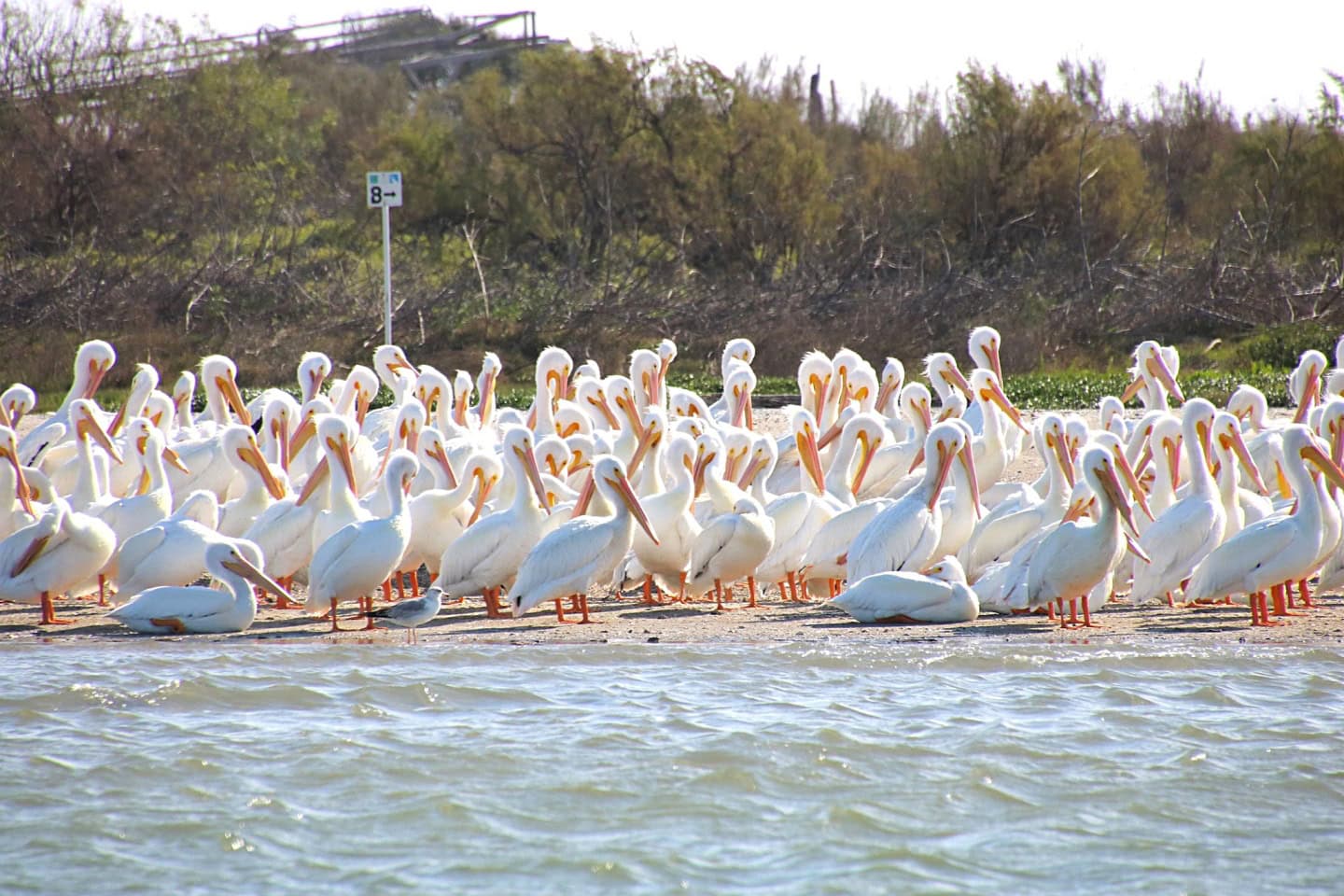
- Creation of a new rookery island to support colonial nesting birds
- Expansion of habitat footprint to increase ecological capacity
- Beneficial use of dredged material to build sustainable coastal features
- Integration of oyster habitat to enhance ecosystem function
Project Goals
The Little Bird Island – North Rookery project is designed to deliver long-term environmental benefits:
- Resiliency – Strengthening coastal systems against erosion and sea-level rise
- Habitat Creation – Providing critical nesting and foraging areas for birds and marine life
- Increased Placement Capacity – Expanding opportunities for beneficial use projects in the region
Looking Ahead
Once complete engineering and permitting is SABP will seek inclusion of the project in the GLO’s Texas Coastal Resiliency Master Plan and seek funding to advance to implementation.
Little Bird Island – North Rookery will provide essential habitat for coastal bird species while supporting broader ecosystem health in San Antonio Bay. This project represents a forward-looking investment in nature-based solutions; balancing habitat conservation, coastal resilience, and sustainable resource management.
Shoalwater Bay Living Shoreline
Protecting a Critical Coastal System
The San Antonio Bay Partnership is leading a large-scale effort to protect and restore Shoalwater Bay, an ecologically important area located between the Gulf Intracoastal Waterway and Espiritu Santo Bay. Stretching more than 10 miles, Shoalwater Bay’s barrier islands serve as a natural shield for coastal habitats. However, these islands are rapidly eroding due to persistent wave energy driven by prevailing south and southeast winds. As gaps widen, critical habitats (including over 1,000 acres of seagrass) are increasingly exposed to damaging wave action and sediment disturbance.
Why It Matters
Shoalwater Bay supports a highly productive coastal ecosystem. Ongoing erosion threatens:
- Barrier island habitat used by colonial nesting waterbirds
- Seagrass beds, which serve as essential nursery habitat for fish and shellfish
- Water quality, due to increased sediment resuspension
- Coastal resilience, leaving the system more vulnerable to storms
Without intervention, these impacts are expected to accelerate, reducing both ecological health and the natural protections these habitats provide to surrounding communities.
What We’re Doing
With support from the Matagorda Bay Mitigation Trust, SABP has launched Phase 1 of a multi-phase living shoreline initiative to identify and prioritize areas for restoration.
This phase focuses on:
- Stakeholder coordination with agencies, scientists, and community partners
- Data collection, including bathymetric and topographic surveys
- Coastal engineering analysis to understand wave dynamics and sediment movement
- Evaluation of restoration alternatives for protecting critical shoreline areas
This effort builds on previous regional planning work, including Ducks Unlimited’s Texas Beneficial Use of Dredged Material Master Plan.
A Phased Approach to Restoration
Given the scale of the system, SABP is implementing a strategic, phased approach:
- Phase 1 (Current): Planning, data collection, and identification of priority areas
- Phase 2 (Future): Detailed engineering design and permitting
- Phase 3 (Future): Obtain funding for construction of living shoreline features
This approach ensures that resources are directed to the most critical areas first while building a strong foundation for long-term success.
Looking Ahead
The Shoalwater Bay Living Shoreline project will:
- Restore and protect barrier island habitat
- Reduce wave energy impacting sensitive seagrass beds
- Improve coastal resilience to storms and sea-level rise
- Support wildlife and fisheries across the region
By combining science, engineering, and collaboration, SABP is working to stabilize this vital coastal system and preserve its ecological function for future generations.
Bill Day’s Reef Restoration
Project Background
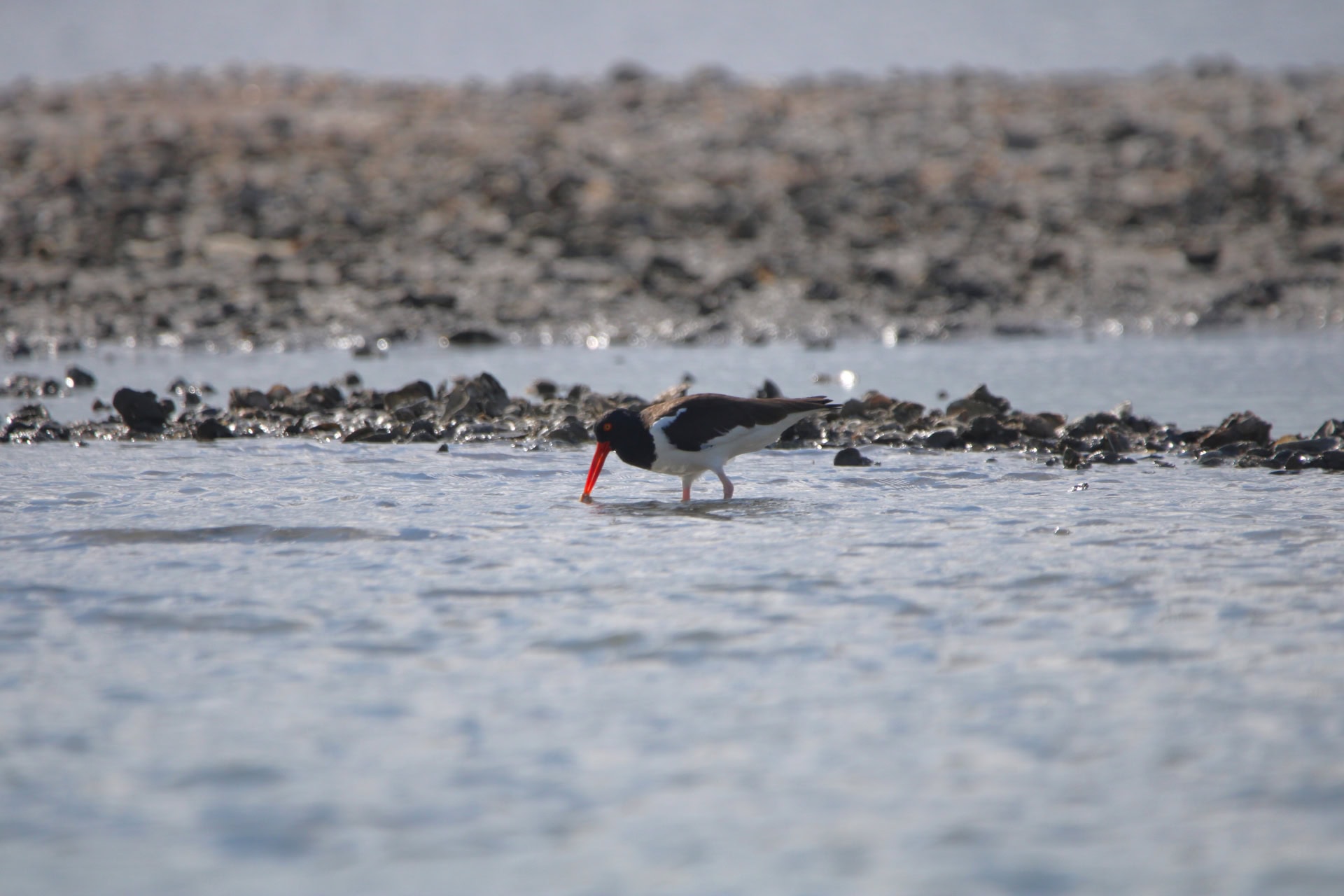
American Oystercatchers (Haematopus palliates) (AMOY), often found along the Texas Coast, are dependent on intertidal habitat for nesting, foraging and roosting needs. Threats to oystercatchers include wash-over of their nesting areas during high tides, predation, and human disturbance. Pairs nesting on small islands without large Laughing Gull (Leucophaeus atricilla) colonies fare better than those associated with Laughing Gull colonies on large islands. However, smaller islands are typically lower in elevation and have a higher risk of wash-over. Bill Day’s Reef is a reef complex in eastern Espiritu Santo Bay on the midTexas coast that has eroded severely over the past several years. While at least one AMOY pair has successfully reproduced on a larger island at the eastern end of the Bill Day’s Reef chain in recent years, nests built by other AMOY pairs in the western part of the reef chain have often been washed over and destroyed by spring tides.
Project Summary
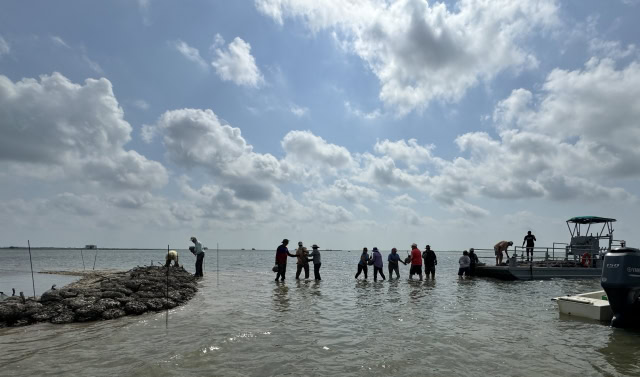
To address this loss of AMOY nesting sites, San Antonio Bay Partnership applied to the Texas General Land Office (TGLO) for, and was awarded, Coastal management Program (CMP) Cycle 26 funds to restore one particular area of AMOY nesting habitat on a small island within the Bill Day’s Reef complex to a viable nesting site for American Oystercatchers. Project funds were allocated to purchase, bag, and transport the shell by barge to the site, to construct the habitat improvements on site, and to administer the project design/management. After several years of planning, permitting, preparation and implementation efforts led by SABP, in the spring of 2024 approximately 600 sq. ft. of the 1,850 sq. ft. island was elevated by up to 2 ft. with bagged oyster shell, then covered with shell hash to provide suitable nesting habitat. The higher elevation should lessen the threat of wash over events during spring high tides. Volunteers bagged, transported, and placed the donated oyster shell on the site.
In addition to the direct benefits of improving AMOY nesting habitat at this particular site, this project serves as a model for other potential restoration sites within the Middle Texas Coast and provides lessons on how to mobilize volunteers to enhance the capacity of local conservation organizations for hands-on conservation work.
Additionally, as birding tourism is an important economic driver for the Texas Coast, providing additional opportunities to observe oystercatchers will enhance the area’s ability to attract visitors who generate economic benefits to the region. Final Report to TGLO
Water for Wildlife
Managing our water resources is one of the most critical issues facing Texas today. The state’s population is growing rapidly and the threat of drought is increasing, putting pressure on limited water supplies. The availability of fresh water supplies to meet the basic physiological needs of wildlife is a growing issue in wildlife and natural resource conservation.
The San Antonio Bay Partnership has collaborated with other conservation partners on a “Water for Wildlife” initiative, which includes: (1) installation of water wells to provide groundwater for wildlife during times of drought, (3) completion of a water well suitability analysis to determine the ideal location for water well installation, and (3) examination of strategies to secure environmental flows for wildlife.