The San Antonio Bay Partnership, in collaboration with Texas A&M AgriLife Research, is leading a multi-year effort to restore freshwater flow to Townsend Bayou and the surrounding marsh system. This Phase I project is designed to test whether targeted freshwater pulses can help reduce salinity stress, improve marsh conditions, and support the long-term recovery of this important coastal habitat. The project combines field monitoring, hydrologic modeling, and stakeholder coordination to better understand how freshwater can be delivered to the marsh in a way that benefits both wildlife and ecosystem function.
Why It Matters
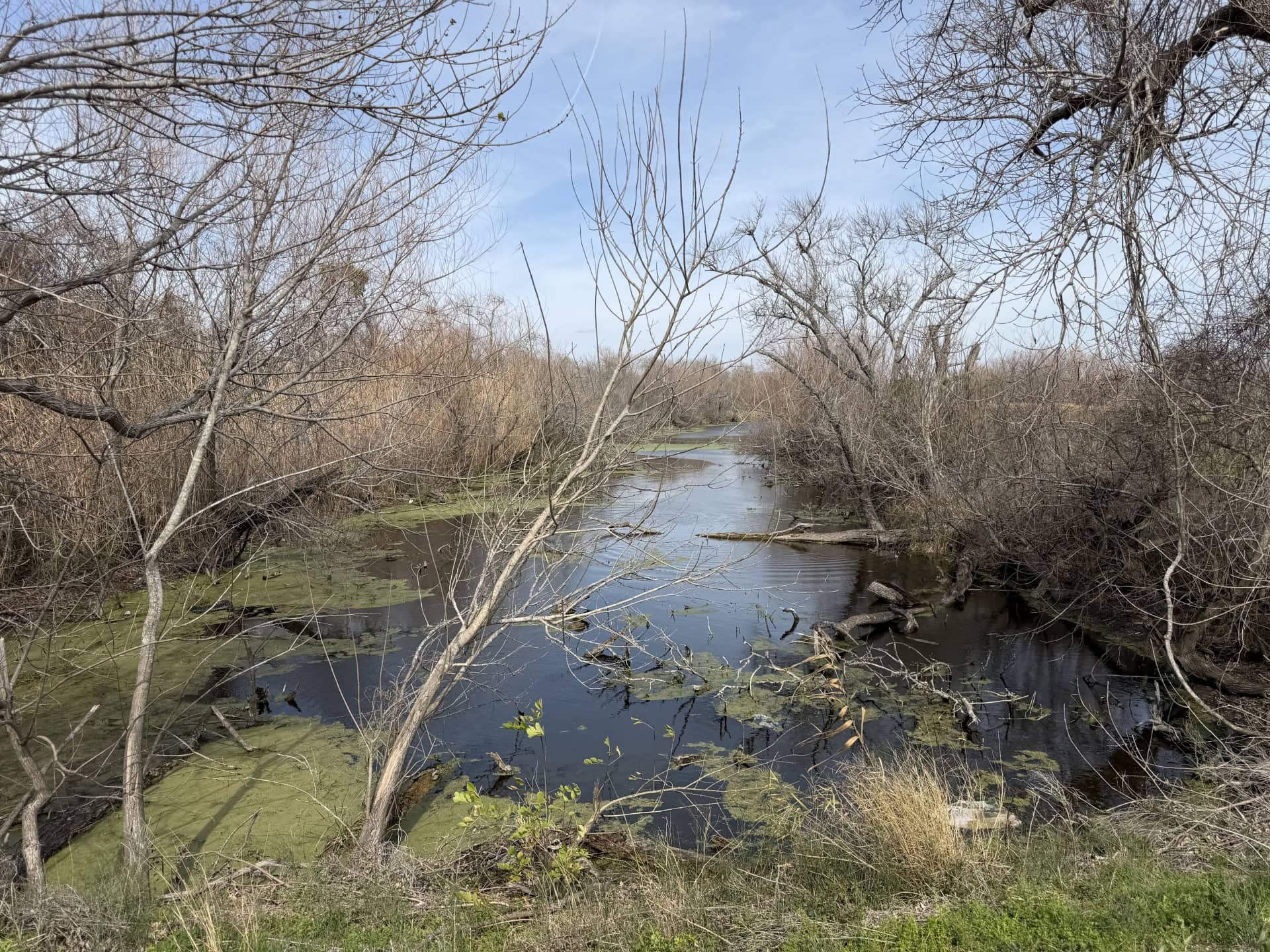
Townsend Bayou and its marshes are part of a valuable coastal system that supports fish, shrimp, crabs, birds, and other estuarine wildlife. Over time, reduced freshwater input has contributed to elevated salinity levels, which can affect marsh vegetation, aquatic habitat quality, and the overall resilience of the system.
Restoring freshwater flow has the potential to:
- Lower harmful salinity levels in marsh and bay waters
- Improve habitat conditions for fish, shrimp, crabs, and other nekton
- Support healthier marsh vegetation
- Strengthen long-term ecological resilience
This project is an important first step in understanding how freshwater restoration can be used to improve marsh health in Townsend Bayou.
What We’re Doing
Phase I centers on an experimental freshwater pulse of approximately 100 acre-feet into Townsend Bayou. Before, during, and after that pulse, the project team will collect data to evaluate how the marsh responds.
The work includes:
- Monitoring salinity, water levels, and flow using a network of field sensors
- Surveying fish, shrimp, crabs, and other marsh wildlife through field sampling
- Tracking vegetation response through field plots and drone-based imagery
- Developing a hydrologic model to simulate freshwater movement through the marsh
- Evaluating long-term restoration scenarios for future freshwater delivery
This effort will provide the scientific foundation needed to guide future restoration planning.
Project Partners
This project is being carried out through a research partnership between San Antonio Bay Partnership and Texas A&M AgriLife Research, with Dr. Russell “Rusty” Feagin serving as Principal Investigator for the AgriLife Research portion of the work.
Additional coordination includes collaboration with project partners, stakeholders, and landowners to support planning, monitoring, water supply evaluation, and long-term restoration strategy development.
A Multi-Year Restoration Planning Effort
The project is structured as a 36-month Phase I effort that includes:
- Project development and stakeholder coordination
- Permitting and landowner agreements
- Pre-pulse environmental monitoring
- Freshwater pulse implementation
- Post-pulse monitoring
- Data analysis and hydrologic modeling
- Evaluation of future restoration and water supply options
- Final reporting and recommendations
This phased approach ensures that future restoration decisions are grounded in field data, scientific analysis, and practical implementation planning.
Looking Ahead
The ultimate goal of this project is to develop a long-term plan for restoring freshwater flow to Townsend Bayou and its marshes. By testing freshwater delivery at pilot scale and modeling future scenarios, SABP and its partners are building the knowledge needed to guide larger restoration actions in the future.
This work will help identify:
- Freshwater volumes needed to improve marsh conditions
- Potential barriers to flow and opportunities for marsh management
- Long-term infrastructure and water supply options
- A recommended path forward for broader marsh restoration
Through science, partnership, and planning, this project represents a significant step toward restoring the ecological health of Townsend Bayou.